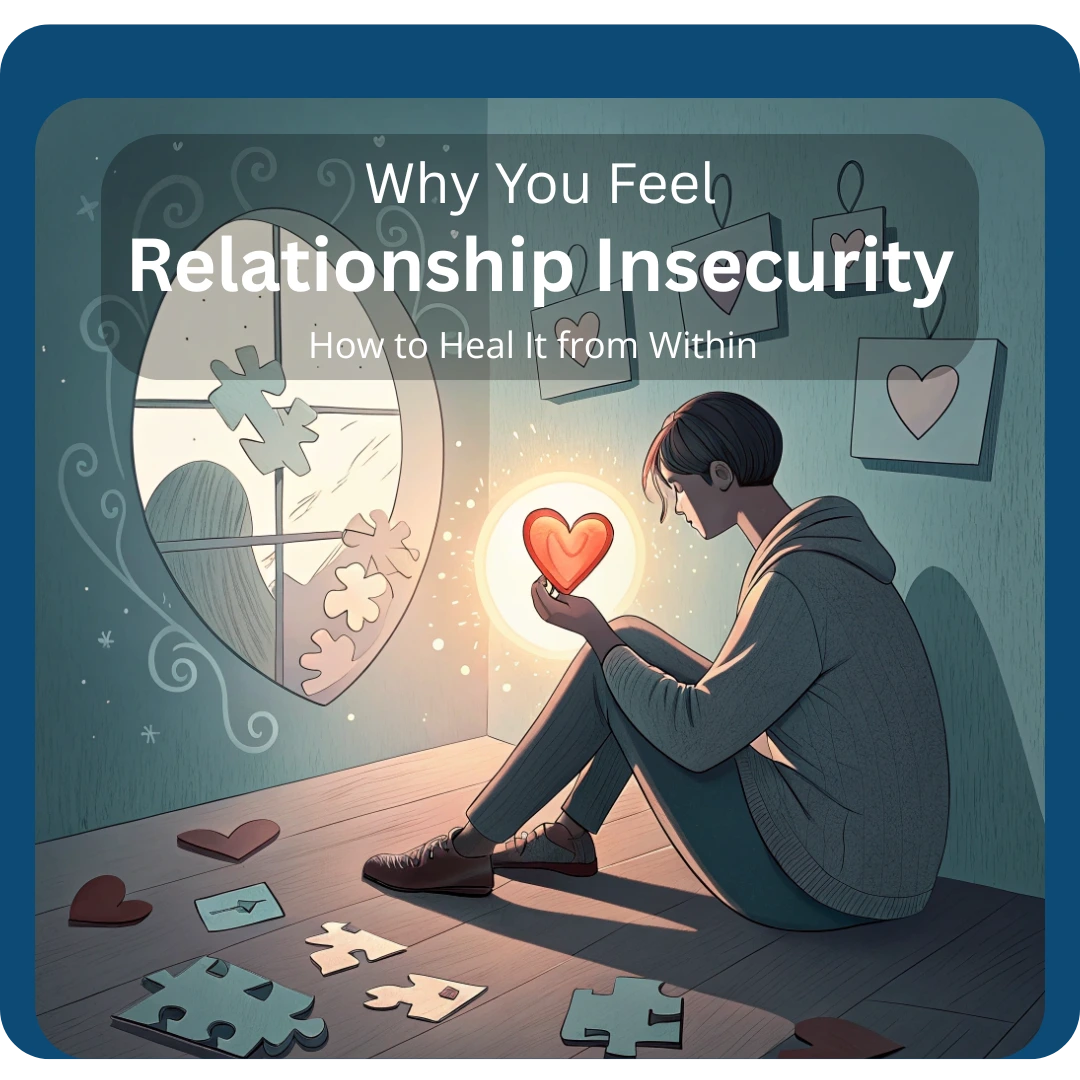
Introduction to Relationship Insecurity
Where Does Relationship Insecurity Come From?
Relationship insecurity is a protective pattern built over time. Common sources include:
- Childhood attachment wounds
- Unhealed past relationships
- Low self-worth
- Fear of abandonment rooted in the inner child
Signs of Relationship Insecurity in a Relationship
It often shows up as:
- Constant need for reassurance
- Jealousy or comparison
- Overanalyzing your partner’s actions
- Trying to control situations
- Sabotaging the relationship due to fear
How to Begin Healing Relationship Insecurity
The goal is to regulate your inner world so you’re not destabilized by external triggers. Here’s how:
Reparent Your Inner Child
Visualize the little girl in you who was afraid and unloved. Tell her, ‘I see you. I love you. You’re safe with me now.’ Inner child work rewires the roots of insecurity.
Notice the Story, Not the Trigger
Pause when you’re triggered. Ask:
- What story am I telling myself?
- Is it true?
- Have I felt this fear before?
This helps separate fear from fact.
Regulate Your Nervous System
Use tools like:
- Deep belly breathing
- EFT tapping
- Grounding techniques
- Journaling
Create Emotional Safety Routines
Build daily rituals that affirm inner safety:
- Morning intentions
- Affirmations
- Relationship check-ins
- Social media boundaries
Family Constellation Therapy (Deeper Systemic Healing)
Sometimes insecurity is ancestral. Family Constellation Therapy can reveal entanglements:
- Bonds with unhealed maternal wounds
- Hidden loyalty to betrayed ancestors
- Inherited beliefs like ‘men don’t stay’
What a Healthy Relationship Needs Instead
When secure within yourself, you can:
- Communicate calmly
- Allow space
- Trust without needing proof
- Feel emotions without reacting impulsively
A Note to the Woman Reading This
Insecurity, neediness, and fear are not flaws. They are wounds asking to be witnessed. You deserve love that feels safe—not just in his arms, but within yourself.
Where to start
If any of this describes something you recognise, the first step is a conversation rather than a commitment. A free consultation exists to work out what would genuinely help — including saying plainly if this is not the right approach for you.