— Dr. Gabor Maté
Have you ever found yourself reacting way too strongly to something seemingly small?
A tone of voice. A missed message. A rejection that spiraled into a breakdown.
That’s not “drama.” That’s your inner child wound—calling out for attention.
And if you’ve been struggling with anxiety, overthinking, people-pleasing, low self-worth, or emotional numbness, chances are… your younger self is still waiting to be seen, heard, and healed.
Welcome to the world of inner child healing—the most overlooked, powerful, and life-changing emotional work you can do.
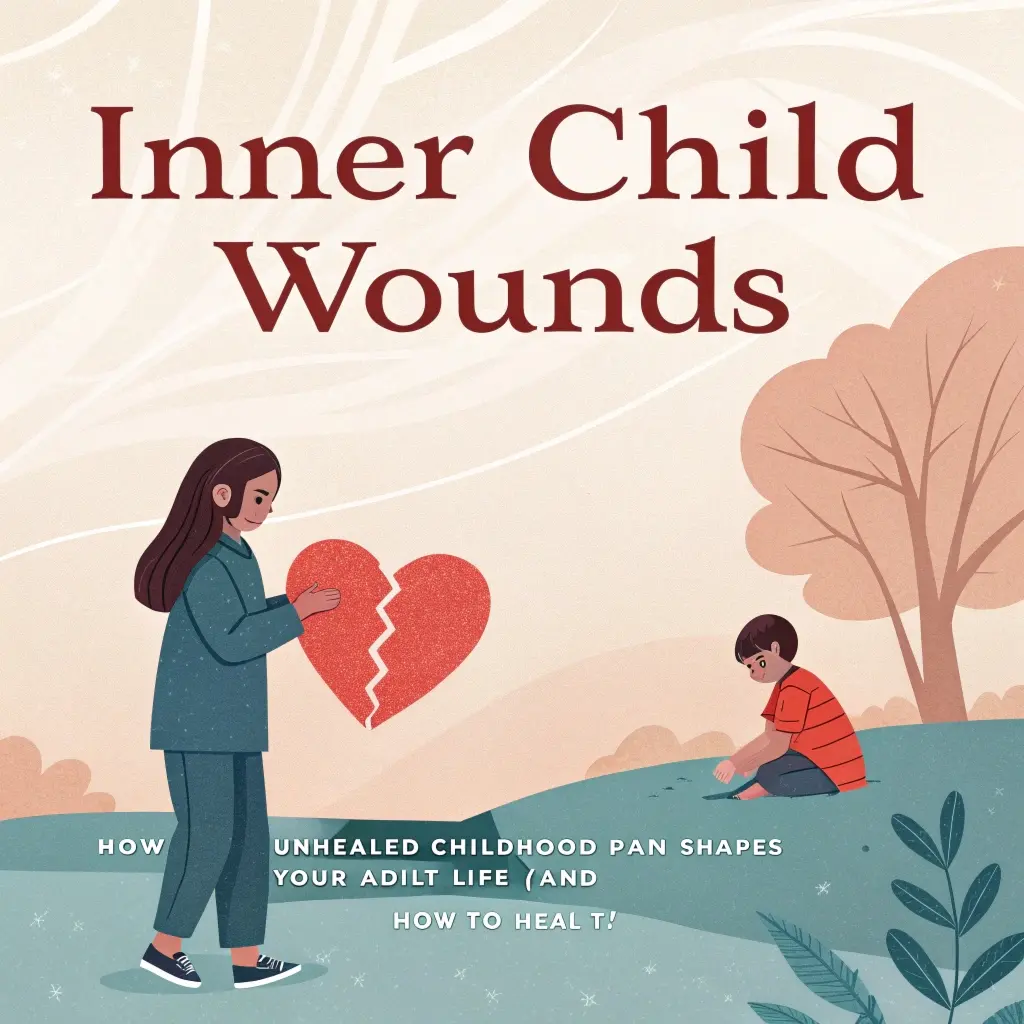
What Are Inner Child Wounds?
Your inner child is the part of your subconscious that holds on to your earliest emotional experiences—especially the painful or confusing ones.
This isn’t just “childhood memories.” This is emotional programming that still drives how you think, feel, and behave as an adult.
Inner child wounds form when a child is:
- Shamed for expressing emotion
- Ignored or emotionally neglected
- Made to feel “not good enough.”
- Pressured to be perfect
- Exposed to conflict, abandonment, or inconsistency
- Denied affection, safety, or boundaries
You may have been told:
“Don’t cry.”
“Stop being so sensitive.”
“You’re too much.”
“Why can’t you be more like ___?”
And you learned to adapt.
To please.
To perform.
To silence your true self.
But here’s the truth: Adaptation is not healing. And those wounds? They don’t go away just because you “grew up.”
How Inner Child Wounds Show Up in Adults?
Let’s make this real.
Here’s how unhealed inner child wounds show up in your adult life:
You repeat relationship patterns
You attract unavailable partners, over-give, or fear abandonment—even in healthy relationships.
You struggle with rejection and criticism
A simple “no” feels like you’re being erased. You overthink texts. You shut down.
You live in anxiety or hyper-independence
You don’t trust others to meet your needs, so you become overly self-reliant—and exhausted.
You feel not good enough—no matter what you achieve
Success doesn’t satisfy. Validation feels fleeting. There’s a constant inner ache of inadequacy.
You’re emotionally numb or disconnected
Joy feels out of reach. You “go through the motions” but feel hollow inside.
If you relate to any of these, your inner child is not broken. She’s buried under survival strategies.
Inner Child Healing: Reclaiming the Parts You Silenced
Inner child healing is the process of gently reconnecting with your younger self—the version of you that never got to fully feel, express, or be held in their truth.
This is not about “blaming your parents.” It’s about breaking the cycle.
When you reparent your inner child, you learn to:
- Speak to yourself with compassion instead of criticism
- Set boundaries without guilt
- Honour your emotions instead of suppressing them
- Build relationships based on mutual respect, not fear
- Feel safe enough to rest, receive, and be real
The Science Behind Inner Child Healing
Inner child work isn’t just emotional fluff. It’s rooted in neuroscience and trauma theory.
When we experience emotional neglect or trauma in early childhood, it imprints onto the brain’s limbic system (the part responsible for emotion and memory). These emotional imprints become unconscious beliefs that control our adult lives.
Research from the ACE (Adverse Childhood Experiences) study shows a direct link between childhood adversity and long-term physical, emotional, and mental health issues—including anxiety, depression, and burnout.
Healing the inner child rewires your brain for safety, self-worth, and secure attachment.
Case Story: From People-Pleasing to Personal Power
Riya, a 35-year-old HR professional, came to us feeling “stuck.” She had everything—career, marriage, a busy social life—but was constantly overwhelmed and resentful.
Through personal inner child healing sessions, she discovered she’d learned to equate love with performance. Her 7-year-old self believed: “If I do everything right, I’ll be accepted.”
After 3 months of deep reparenting work, breathwork, and somatic release, Riya now says:
“For the first time, I’m not trying to ‘earn’ love. I’m just being… me.”
That’s the power of healing the inner child.
Why Inner Child Healing Is Especially Important for Adults?
In Indian culture, emotions are often suppressed in favour of obedience, honour, and family image.
We’re taught to:
- Prioritise others over ourselves
- Avoid conflict at all costs
- Respect authority—even when it harms us
- Keep family issues private, no matter the damage
This creates a generational cycle of emotional silencing.
Inner child healing offers a way out—a path to become the cycle-breaker, the emotionally free, the first one to choose truth over tradition.
Where to start
If any of this describes something you recognise, the first step is a conversation rather than a commitment. A free consultation exists to work out what would genuinely help — including saying plainly if this is not the right approach for you.