Introduction: The Quiet Pain of Feeling “Not Enough”
The job, the relationships, the journaling, the gratitude practice. And still—there’s this quiet, gnawing voice that whispers:
“You’re not good enough.”
“You’re not doing enough.”
“You’re just… not enough.”
It’s not always loud. Sometimes it shows up as perfectionism, people-pleasing, overworking, or even emotional shutdown. But no matter how confident you appear to the world, the voice remains—quietly undermining your joy.
If this sounds familiar, you’re not alone. Low self-worth is one of the most silent, yet powerful emotional blocks we carry. And at the root of it all?
Often, it’s a wounded inner child still waiting to feel safe, seen, and valued.
In this featured blog, we’ll explore what low self-worth really is, where it begins, how it affects your adult life—and most importantly, how you can begin to heal.
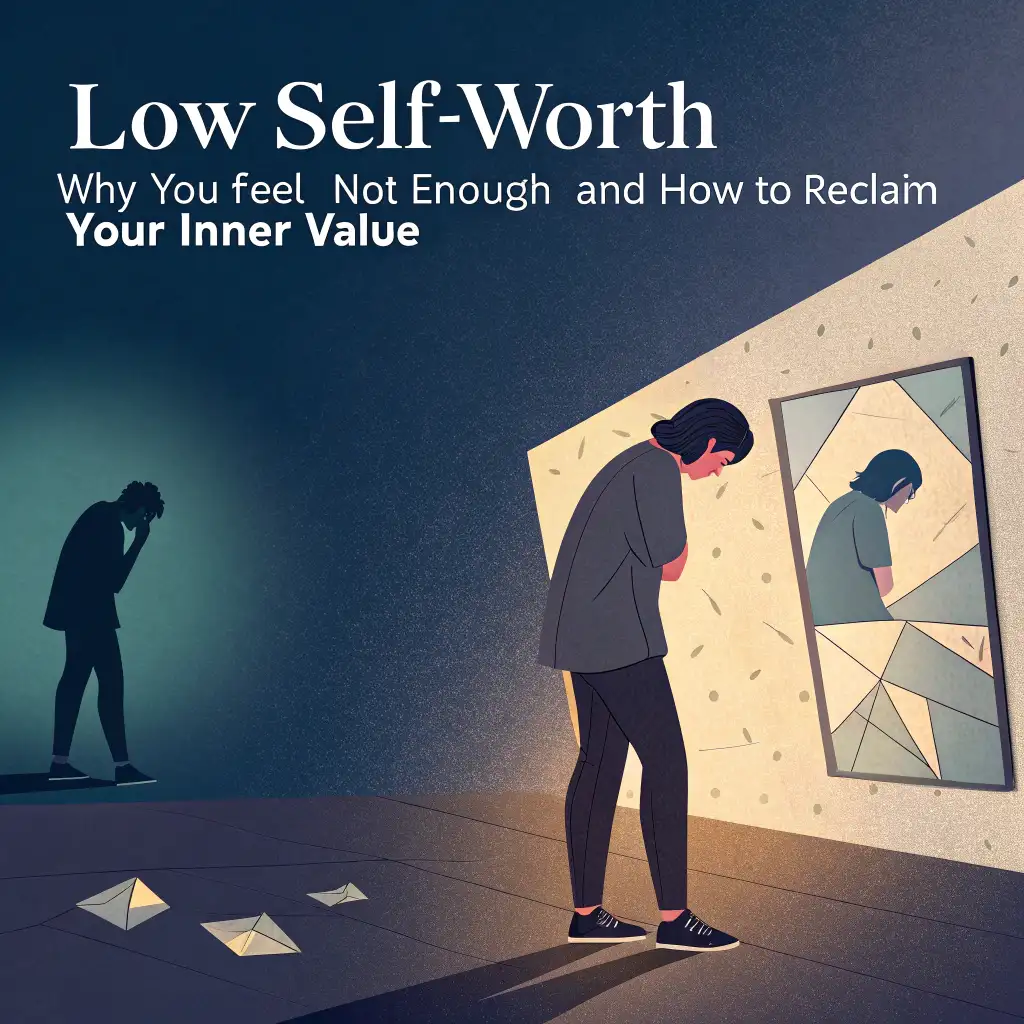
What Is Low Self-Worth? (Hint: It’s Not the Same as Low Self-Esteem)
While self-esteem is how much we value our abilities and achievements, self-worth is deeper—it’s about how worthy we believe we are of love, rest, happiness, and belonging.
If you believe your worth is tied to what you do, not who you are, then you’re likely struggling with self-worth issues.
Common signs of low self-worth include:
- Constant self-doubt and second-guessing
- Difficulty accepting compliments
- Overcompensating with productivity
- Fear of rejection or abandonment
- Settling for less in relationships or career
- Inner harshness (“Why can’t I just get it right?”)
But here’s the truth you need to remember:
You were never born feeling unworthy. You learned it.
And anything learned can be unlearned—with awareness, compassion, and healing.
Where Does Low Self-Worth Begin? The Inner Child Connection
Your beliefs about worth didn’t start in adulthood.
They started when you were five and heard, “Why can’t you be more like your cousin?”
Or when your emotions were dismissed as “drama.”
Or when love felt conditional—based on how “good,” “quiet,” or “obedient” you were.
These early experiences—especially repeated ones—get stored in the subconscious as truths. Over time, the inner child internalizes:
- “I must perform to be loved.”
- “My feelings are too much.”
- “Something’s wrong with me.”
This wounded child then grows up in an adult body, trying to function in the world while carrying invisible scripts of unworthiness.
Healing low self-worth means healing the inner child who still believes those scripts.
Why Traditional Self-Love Advice Doesn’t Always Work?
You’ve probably tried the affirmations:
“I am enough.”
“I love myself.”
“I am worthy.”
But if your inner child is frozen in fear, shame, or grief, no amount of surface-level affirmations will stick.
It’s like trying to rewire a computer with Post-its notes.
True healing requires going deeper—to the root of the belief system. And that’s where inner child healing sessions and our Inner Child Masterclass come in.
How Low Self-Worth Sabotages Your Life (Without You Even Realising)?
Low self-worth doesn’t just “make you sad.” It shapes your reality:
In Relationships:
You might attract emotionally unavailable partners, settle for less, or feel anxious and insecure—even in stable connections.
In Work:
You overwork, undercharge, or stay in jobs where your potential is stifled—because deep down, you don’t believe you deserve more.
In Your Mind:
You engage in harsh self-talk, chronic comparison, and imposter syndrome—even when you’re thriving on the outside.
In Your Energy:
You stay stuck in survival mode. Your nervous system is always “on.” And rest feels unsafe.
Sound familiar?
The Healing Invitation: You Can Rebuild Your Self-Worth from the Inside Out
Here’s the good news:
No matter how long you’ve felt “not enough,” you can learn to feel safe in your worth again.
But it doesn’t start with trying to “fix” yourself.
It starts with listening.
Listening to the child within who was told they had to earn love.
Listening to the beliefs you inherited, but no longer need.
Listening to your body when it says, “I’m tired of proving myself.”
And then, gently offering yourself the words and safety you never received:
“You’re not broken. You’re becoming whole.”
Where to start
If any of this describes something you recognise, the first step is a conversation rather than a commitment. A free consultation exists to work out what would genuinely help — including saying plainly if this is not the right approach for you.