Where does it Originate?
Now, the world is changing. and the journey of self-discovery can involve learning to speak up for what they believe in, pursuing their passions, and advocating for themselves and others. They may find strength in connecting with other girls and women who share similar experiences and who support each other in breaking free from restrictive gender norms.
Ultimately, being a “good girl” can evolve into being a confident, compassionate, and courageous individual who stands up for what is right and lives according to her own values, rather than those imposed by society.
Freeing yourself from the Good Girl Syndrome
Instead of worrying about what everyone else thinks, this new mindset is about discovering who you really are and being proud of it. It’s like taking off a mask and saying, “This is me, and I’m awesome just the way I am!”
I know it’s not always easy to break free from old habits and expectations. It takes guts to stand up and be different, especially when everyone else seems to be following the same old rules.
But when you do embrace your true self, amazing things happen. You start to feel happier and more fulfilled. You have the courage to chase your dreams and do what makes you happy, instead of just going along with what everyone else says you should do.
And the coolest part? When you show the world your true colours, you inspire others to do the same. You create a ripple effect of positivity and acceptance, where everyone feels free to be themselves.
So forget about aiming to be a “good girl” in the old-fashioned sense. Instead, be a good girl to yourself by accepting who you are, celebrating your individuality, and living life on your own terms. That’s the true secret to happiness and success.
Here are a few tips to overcome good-girl syndrome:
- Know Yourself: Understand that you might be following certain rules just because you think you should. Question if those rules truly make you happy.
- Say No: It’s okay to say no to things you don’t want to do. You don’t always have to please others.
- It’s Okay to Mess Up: Everybody makes mistakes. Don’t beat yourself up over them.
- Take Care of Yourself: Make sure to take time for yourself and do things that make you happy.
- You Don’t Have to Be Perfect: Nobody is perfect, and that’s okay. Just try your best.
- Find Support: Surround yourself with people who support you and make you feel good about yourself.
- Explore Your Interests: Don’t be afraid to try new things, even if they’re not what others expect of you.
- Be Kind to Yourself: Treat yourself with the same kindness you would treat a friend.
- Celebrate Your Wins: Be proud of yourself for the things you accomplish, no matter how small they may seem.
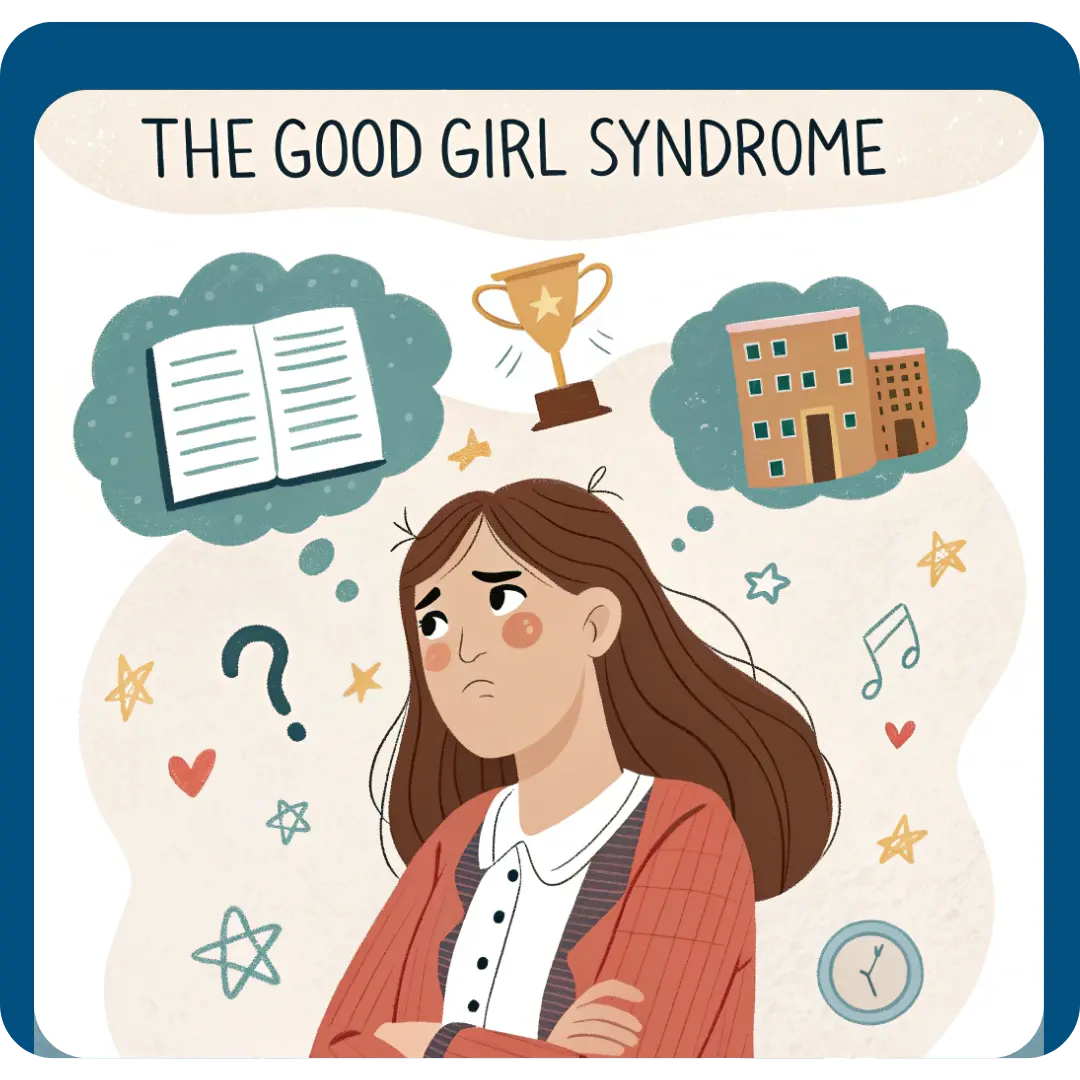
Getting rid of the “good girl syndrome” means breaking free from the pressure to always be nice, obedient, and please others at the expense of your own happiness. It’s about realising that you don’t have to fit into a certain mould to be worthy or valuable. Instead, it’s about discovering who you truly are, what you want, and standing up for yourself. It’s about finding the courage to pursue your own path, even if it means going against what others expect of you. In the end, it’s about living authentically and finding fulfilment on your own terms.
Natasha Arora is a Research Executive, Treta Foundation and a clinical psychologist.
Where to start
If any of this describes something you recognise, the first step is a conversation rather than a commitment. A free consultation exists to work out what would genuinely help — including saying plainly if this is not the right approach for you.